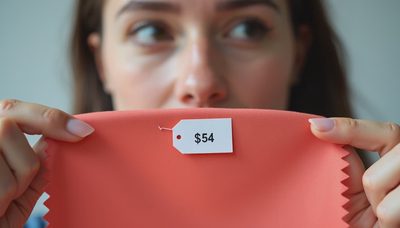
Last fall, I stood in a fitting room holding two nearly identical oversized blazers. One was $30 at a fast-fashion retailer; the other was $300 from a contemporary label. Both were gray, single-breasted, and styled with straight-leg jeans. So why the same trend costs $30 vs $300 is not a silly question. It is the question I would want answered before handing over my credit card.
After seven years buying contemporary apparel for Nordstrom, I have seen thousands of garments up close. Sometimes the $300 version is genuinely better. Sometimes you are paying for a logo, a prime retail location, or a marketing campaign photographed in perfect light. The trick is learning which details affect your actual life and which ones are just expensive decoration.
The price starts with the fabric
The most obvious difference between a $30 and $300 garment is often hiding in the fiber content. A $30 sweater might use acrylic or a polyester blend that looks polished on the hanger but pills quickly at the underarm and side seams. A $300 version could use merino wool, cashmere, silk, linen, or a dense cotton with a more substantial hand.
That does not make every natural fiber automatically superior. A thin linen shirt can feel flimsy, while a well-made cotton-poplin shirt from Uniqlo or Gap can work beautifully for years. What matters is fiber quality, fabric weight, recovery, and how the material behaves after washing. Hold the garment toward the light. Scrunch a sleeve and see whether it springs back. Look for a surface that feels even rather than thin, shiny, or oddly stiff.
When people ask why the same trend costs $30 vs $300, I start with the material because it is something you can inspect without knowing a brand's story. A $30 polyester slip skirt might be exactly right for a one-season experiment. A $300 silk skirt deserves more scrutiny: Is the silk weighty? Are the seams finished cleanly? Will you wear it with sweaters, boots, and sandals, or only for one wedding?

Construction is where the quiet money goes
The second answer to why the same trend costs $30 vs $300 is construction. Turn a garment inside out. Check whether the seams lie flat, the stitching is consistent, and the lining stays attached at the hem. On a jacket, look at the shoulder seam, sleeve insertion, buttonholes, and back vent. On jeans, inspect the yoke, pocket corners, zipper, and belt loops.
A higher price can cover better patternmaking, additional fitting samples, reinforced stress points, and skilled finishing. It can also buy details you feel rather than notice: a waistband that stays put, a coat that hangs cleanly, or a blazer sleeve that does not twist when you reach for your coffee.
Still, construction has limits. A $300 blouse with loose threads and crooked buttons is not a good buy just because the tag says “designer.” I once rejected a wholesale sample from a well-known contemporary label because the collar rolled unevenly on one side. The name was strong, but the garment was not ready for real life. Price is a clue, not proof.
Fit explains more than the label
Pattern development is expensive, especially when a brand offers multiple sizes and adjusts the design thoughtfully across them. A $30 trend piece may be cut from one basic block, with the same proportions scaled up or down. A $300 garment may have been tested on several bodies, with changes to the shoulder, rise, sleeve, bust, or hip.
That does not mean an expensive item will fit you better. Bodies are not standardized, and no price tag can predict whether a pair of trousers will sit comfortably or whether a dress will land at the right length. A $30 skirt that fits immediately can be a better purchase than a $300 skirt requiring major alterations.
For a fair comparison, try both pieces with the bra, shoes, and base layer you normally wear. Sit down. Walk. Raise your arms. Check the side view and back view. If you keep adjusting the garment after five minutes, it is not earning its place in your closet, regardless of why the same trend costs $30 vs $300.
Labor, supply chain, and brand costs matter
Labor is another major part of the answer. Garments made in smaller runs, in factories with higher wages, or in countries with more expensive production can cost more before they reach a store. Small-batch brands also spread design, sampling, photography, warehousing, and customer service across fewer units.
Then there is retail markup. A brand sold through boutiques or department stores pays for wholesale margins, shipping, showroom appointments, sales staff, and returns. A direct-to-consumer company can sometimes offer a $180 garment at a lower price because it skips part of that structure. Meanwhile, a $30 item may be produced in enormous quantities, shipped efficiently, and supported by a very fast inventory cycle.
The uncomfortable truth is that a higher price does not always guarantee ethical production or generous wages. Look for concrete information about factories, materials, repair programs, and production quantities rather than relying on words such as conscious or premium. Transparency is more useful than a green hangtag.

The cost-per-wear test changes the math
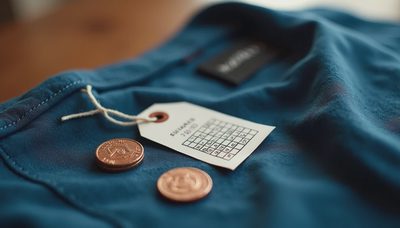
Here is where why the same trend costs $30 vs $300 becomes personal. Suppose you buy a $30 faux-leather skirt and wear it four times before the coating cracks. That is $7.50 per wear. A $300 wool-blend skirt worn 40 times over three years costs $7.50 per wear too. The expensive item wins only if you actually reach for it.
My own rule is to estimate realistic use, not fantasy use. I might wear a $120 cardigan twice a week from October through March, making the cost-per-wear reasonable. I will not wear a dramatic feather-trimmed top 30 times, no matter how beautiful it looks in a fitting room. A $45 version can be the smarter choice for a novelty trend that might feel dated by spring.
Care changes the calculation as well. If the $300 garment requires dry cleaning after every wear, the purchase includes time and maintenance. If it can be washed gently and repaired, that is value. Read the care label before you decide that an item is a forever piece.
How to shop the trend without overspending
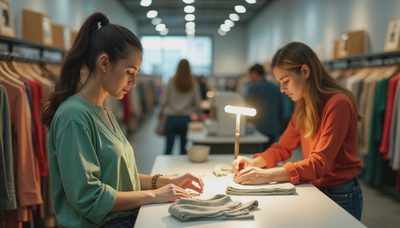
Start by deciding what role the trend plays. If you are testing barrel-leg jeans, a red cardigan, or a metallic shoe for the first time, choose a price that lets you experiment without resentment. Stores such as Madewell, COS, J.Crew, Uniqlo, and Nordstrom Rack can be useful middle ground, depending on the item and sale timing.
Spend more when the garment is a workhorse, difficult to fit, or made from a material you will enjoy for years. A wool coat, leather belt, sturdy boot, or well-cut trouser often deserves more attention than a seasonal micro-trend. Spend less when the item is highly specific, uncomfortable to care for, or likely to appear in every clearance section within six weeks.
Before buying, ask five questions: Does it fit now? Can I name three outfits? Will I wear it in my actual climate? Is the fabric appropriate for the price? What happens if it needs repair? Those answers tell you more than the difference between $30 and $300 on a product page.
The real lesson behind why the same trend costs $30 vs $300 is that price combines many things: material, labor, patternmaking, production scale, retail structure, and brand positioning. You do not need the costly version to look current, and you do not need to apologize for buying the affordable one. Inspect the garment, do the cost-per-wear math, and choose the version that supports your life. Then wear it and go.

No notes yet — write the first one.