I pulled a $38 black silk blouse from a shipping box in my Denver living room. Next to it sat a $295 blouse from a high-end brand I'd ordered for a client. Both were black, both had buttons, and both looked fine on a hanger. The difference only showed once you touched them, turned them inside out, and wore them through a real day. That's the affordable vs expensive fashion conversation in a nutshell: it's not about the price tag; it's about what you're actually buying.
As a former Nordstrom buyer, I've handled thousands of garments. I know that some $40 pieces are steals and some $400 pieces are rip-offs. The key is learning to tell them apart.
The Construction Test
When you're weighing a $70 pair of trousers against a $250 pair, flip them inside out. Look at the seams. A clean French seam or rolled hem means the maker cared; a raw edge or zigzag stitch means they didn't. Check the fabric: hold it up to the light. If you can see through it, it's cheap regardless of the label. Pull the material — does it snap back or stay stretched? That tells you how it will hold up after eight hours at your desk. And check the zipper. A sturdy YKK zipper with a smooth track costs less than a dollar more, but it changes how a jacket wears for years. That's the kind of knowledge that makes the affordable vs expensive fashion question feel like a checklist instead of a gamble.

Where to Spend More
Outerwear is worth the splurge. A winter coat from Patagonia, Woolrich, or a well-reviewed Quince parka will handle Denver snow for a decade. Shoes are another yes: a $180 pair of leather loafers from L'Agence or Nisolo can be resoled and will age beautifully. A $40 fast-fashion pair will peel and need replacing every season. Jeans are a middle ground. I've had great $50 pairs from Target's Universal Standard line and great $190 pairs from Mother Denim. The difference is fabric weight and fit consistency. If you find a pair under $100 that has both, buy it. If not, pay for the pair you'll actually live in.
Where to Save Without Looking Cheap
Now for the fun part: the affordable vs expensive fashion sweet spot. Trendy pieces — the puff sleeve, the neon color, the seasonal print — should be cheap. Buy them at H&M, Zara, or Target and wear them hard for six months. Trends expire by design. Basics like tees, tanks, and pajamas are also easy to buy cheap: Uniqlo has great $20 tees, and Old Navy does leggings for under $25. But if a basic is something you wear every day for work — a white button-down or black pants — step up to a mid-range brand like Madewell or Everlane.
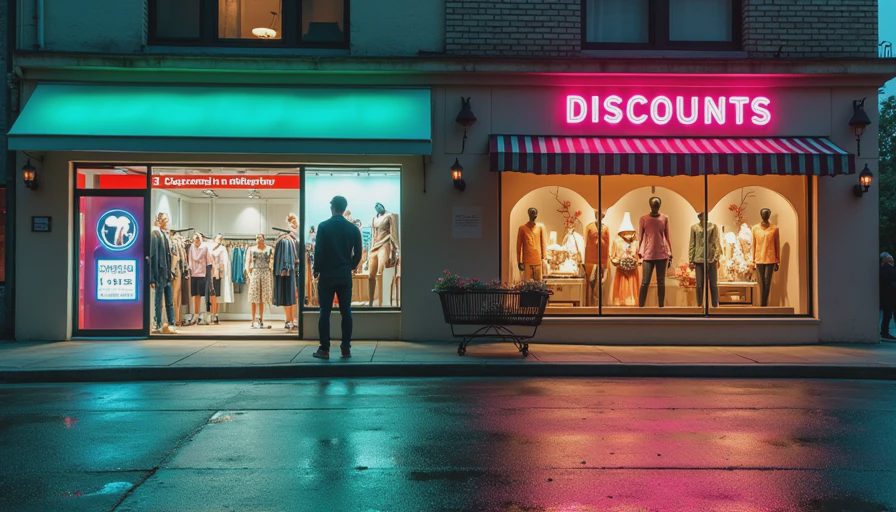
When Cheap Actually Costs You More
There's a difference between a smart deal and a false economy. I've seen clients buy three $80 coats in two years because each one lost a button, faded, or tore at the armhole. That's $240 for clothes they never really liked. A single $250 coat, worn every winter weekend for four years, works out to about $15 per wear — and they actually felt good in it. The same logic applies to handbags. A $50 PU leather bag cracks at the corners within a season; a $300 full-grain leather bag from a brand like Portland Leather Goods can last a decade with occasional conditioning. The cheaper purchase isn't cheaper if you have to make it again.
Also, pay attention to fit. An expensive item that needs tailoring is still worth it if the alteration costs less than the gap in quality. A $200 blazer with $40 of alterations beats a $90 blazer that hangs awkwardly and never gets worn. The real enemy isn't the price tag; it's the garment that sits in your closet untouched.
How to Calculate Cost Per Wear
Here's the formula that stops the guilt: divide the price by how many times you'll realistically wear the item over two years. A $400 dress worn to five weddings costs $80 per wear. Expensive. A $200 pair of work trousers worn twice a week costs about $2 per wear. A bargain. I run this math on my phone for every item over $100. It's how I can own a $450 parka that I've worn 100 times — that's $4.50 per wear — and still feel fine about a $38 blouse I wear once. The cheap piece doesn't always win. The piece you actually wear does.
The Bottom Line
Stop comparing price tags in a vacuum. Run the construction test, do the math, and ask yourself whether a piece will still be in your closet in three years. The affordable vs expensive fashion decision isn't about snobbery or sacrifice. It's about spending where it counts and saving where it doesn't. Wear what you love, wear it often, and let your wardrobe work as hard as you do. Because the best outfit you own is the one you actually put on — and that's true at any price.



No notes yet — write the first one.