Last week I stood in a Denver dressing room holding two pairs of jeans that looked identical on the hanger. One cost $78. One cost $198. Same wash, same cut on paper, same size tag. By the end of the afternoon, I had my answer: a real jeans comparison worth buying is about more than price. Here's what I look for when I compare denim like a buyer, not a shopper.
Start with fit, not the brand name
I spent seven years buying women's apparel at Nordstrom, and the first thing I learned is that fit is the whole game. The most expensive pair will lose to a $60 pair if it gaps at the back waist. The cheapest pair can become your everyday uniform if the rise and thigh match the way your body moves.
When I do a jeans comparison worth buying, I ignore the label for five minutes. I sit, squat, and reach. Does the waistband dig in? Do the front pockets lie flat? If the fit isn't right in the store, no amount of breaking in will fix it later.
That fit-first approach has saved my clients hundreds of dollars. One friend had been buying high-end denim online and returning most of it. When we compared three pairs in a fitting room, the pair she loved most was the mid-priced one she'd never have picked off the rack.
What I check before I compare jeans
Once the fit feels good, flip the jeans inside out and look at how they're made. First, the stitching. Look for a tight, even seam. Loose threads mean the factory rushed. Second, the hardware. A good zipper pulls smoothly, and the button is solid. Third, the fabric. A little stretch is great, but too much elastane means the knees bag out by noon. I look for around 92 to 98 percent cotton with just enough give.

This is where the conversation gets real. In a jeans comparison worth buying, the price tag usually reflects quality, but not always. I've seen $150 jeans with thin pocket bags that wore through in months. I've also seen $90 jeans from Everlane and Madewell hold up for years. The math is cost per wear, not the number on the tag.
Comparing mid-range and premium denim
Let's talk dollars. The sweet spot for everyday jeans is between $80 and $150. Brands like Madewell, Levi's, and Everlane live there. Above $150, you're paying for premium denim from brands like Frame, AGOLDE, or Citizens of Humanity. Those can be excellent, but you need to love the fit enough to wear them weekly, or the cost per wear gets ugly.
Below $80, you can find solid pairs at Target or Uniqlo. The catch is often the details: thinner zippers, less durable rivets, and fabric that loses its shape. I'm not saying never buy them. I'm saying a jeans comparison worth buying should include all three price tiers so you can see where your money goes.
Last year, I compared a $69 pair from Target, a $118 pair from Levi's, and a $198 pair from Frame in the same dark wash. The Levi's won. They had the best rise, the most comfortable stretch, and construction nearly as clean as the Frame pair.
How to do your own comparison without losing an afternoon
You don't need to buy ten pairs and return nine. Pick one wash, then grab three pairs in that wash from three price points. Spend five minutes on fit, then flip each pair inside out and compare stitching, hardware, and fabric weight. Note the style number. If the cut works, you can order the same one in other washes later.
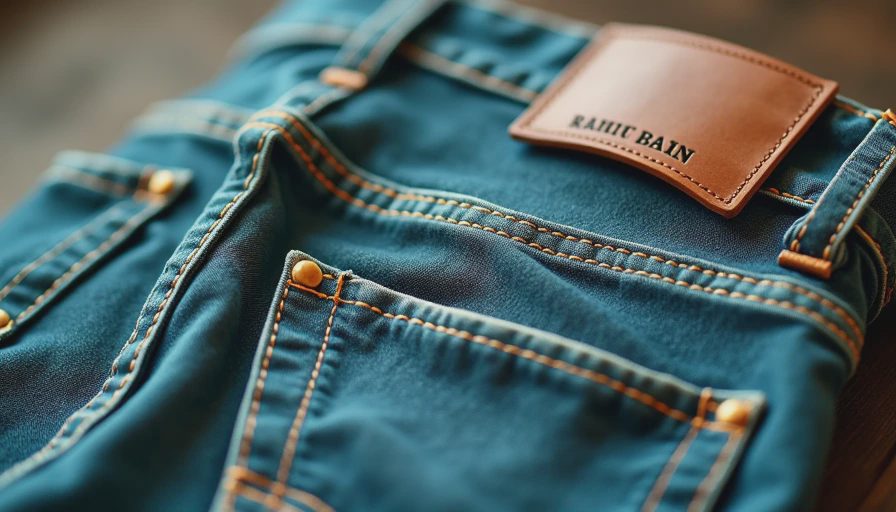
Do this at a store with a good return policy and a wide denim wall, like Nordstrom or Madewell. If you'd rather shop from home, order the same size from two or three brands, try them on the same day, and send back what doesn't work. And don't forget to move in them. Sit, squat, reach, walk. Jeans that look perfect standing up can feel totally different after a real day.
Bring the shoes you'll actually wear, because the hem and leg opening look different with sneakers versus flats. And if you're between sizes, size up instead of down. Denim stretches with wear, and a waistband that's too tight will only get worse by the end of the day.
The bottom line on your denim decision
A meaningful jeans comparison worth buying comes down to three things: fit, construction, and cost per wear. The right pair doesn't have to be the most expensive one. It has to be the one you reach for on a normal Tuesday and the one that still looks good after a trip through the dryer.
I keep a running cost-per-wear tally on my phone for anything over $100. A $150 pair worn twice a week for two years costs less per wear than a $60 pair worn twice before it ends up in the donation bag. That's the math that actually matters. I've bought jeans I loved for $100 and jeans I wore once for $200. The winner was never the one with the fancier label.
So try the expensive pair. Try the budget pair. Compare them on your body, in daylight, after a real meal. And when you find the one that makes you forget what you're wearing, buy two. Wear it and go.

No notes yet — write the first one.