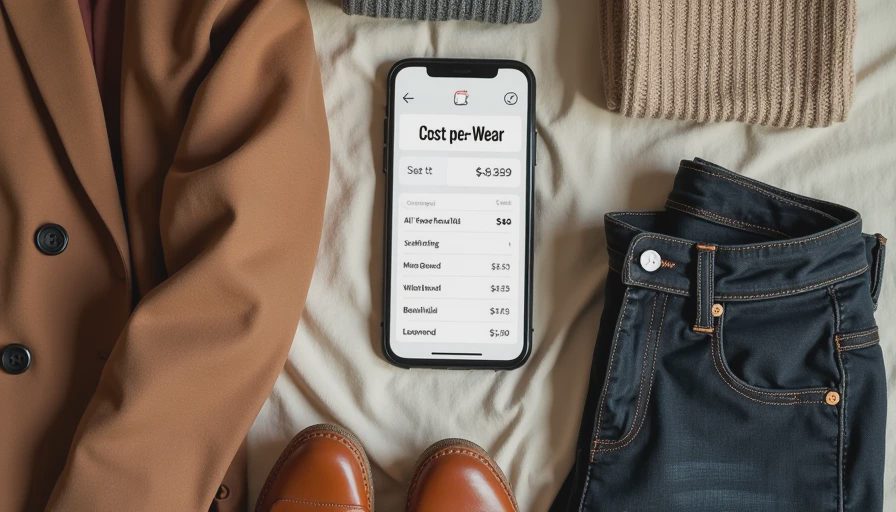
The Spreadsheet That Started It All
It began as a joke. During my Nordstrom buying days, I started keeping a simple note on my phone tracking how often I actually wore the pieces I bought. What started as mild curiosity became one of the most powerful tools in my closet.
Now, years later, I still maintain a running cost-per-wear tally for everything over $100. It sounds a bit much, I know. But hear me out — this habit has saved me thousands of dollars and helped me build a wardrobe I genuinely love wearing.
What Cost-Per-Wear Actually Means
Simple formula:
Cost per wear = Price of item ÷ Number of times worn
A $200 jacket worn 10 times = $20 per wear.
The same jacket worn 50 times = $4 per wear.
Suddenly the math gets really clear.
Why Most People Get This Wrong
We tend to think about the upfront cost instead of the long-term value. That $68 trendy top you wear twice? $34 per wear. That $180 sweater you wear 60 times a year? Under $3 per wear after the first year.
The expensive item that lasts and gets worn often often ends up being the thriftiest choice.

How I Track It (Without Being Crazy)
I keep it simple:
Note purchase price and date
Update wear count every few months
Review the list twice a year
No daily logging. Just honest estimates based on my actual habits.
Game-Changing Lessons This Habit Taught Me
Lesson 1: Basics Deserve Investment
My highest cost-per-wear regrets were almost always cheap basics. The $25 white tee that fell apart after 8 washes. The $40 pants that lost their shape.
Meanwhile, my quality white button-downs and good jeans have some of the lowest cost-per-wear numbers in my closet.
Lesson 2: Trends Are Expensive
That “must-have” trendy piece I bought on impulse? Usually ends up with a terrible cost-per-wear because I stop loving it after one season.
Lesson 3: Versatility Wins
Pieces that work with many different outfits rack up wears much faster. My camel blazer is a cost-per-wear champion.
Lesson 4: Emotions Matter
Items that make me feel good when I wear them get worn more. Joy is a factor in the math.
My Current Cost-Per-Wear Standouts
Camel Wool Blazer: Under $3 per wear after years of heavy use
Dark Rinse Jeans: Around $2.50 per wear
Merino Wool Sweaters: Consistently under $4 per wear
Leather Sneakers: Surprisingly low after daily wear
These pieces keep proving their worth season after season.
How This Habit Changed My Shopping Behavior
I now ask better questions in the fitting room:
How many times will I realistically wear this in the next 12 months?
Does this work with at least 5–7 things I already own?
Is the quality good enough to justify the price for the expected wears?
Will I still love this in two years?
These questions have dramatically reduced impulse buys and regret purchases.
Making Peace with Occasional Splurges
Not everything needs to have rock-bottom cost-per-wear. Sometimes I buy something purely because it brings me joy — a special dress for a big event, or a beautiful pottery-related piece. The key is doing it consciously.
Starting Your Own Cost-Per-Wear Practice
You don’t need a fancy spreadsheet. Try this:
Pick 5 items in your closet over $100
Estimate how many times you’ve worn each
Calculate the cost-per-wear
Notice patterns
You’ll quickly see what’s working and what isn’t.
The Unexpected Emotional Benefit
This habit reduced my shopping guilt and closet anxiety. I no longer feel bad about “expensive” items when I see how much value I’m getting. And I feel good about saying no to things that won’t serve me long-term.
Real Life in Denver
This approach works especially well here. Our active lifestyle means I need clothes that can handle hikes, brewery visits, pottery, and work. Pieces that do multiple jobs get worn more and deliver better value.
Final Thought: It’s About Freedom
My cost-per-wear habit isn’t about being cheap. It’s about being intentional. It helps me buy less, choose better, and actually use what I own.
The goal isn’t a perfect spreadsheet. It’s a closet full of clothes I love wearing that support the life I actually live.
What’s the best cost-per-wear item in your closet right now? Tell me in the comments — I love seeing real-life examples.
Wear it and go, friends. And may your favorite pieces have the lowest numbers on your list.




No notes yet — write the first one.