I learned this on a cold Denver morning when Scout decided the block needed a full sniff tour and I realized outfits for dog walks are basically a test of your patience, your shoes, and your laundry habits. If something catches on a leash, shows mud too fast, or needs constant adjusting, it is already too much work. The best version is the one that lets you answer the door, clip on the leash, and keep moving without a mental outfit check. That is the whole game. Wear it and go.
Start with shoes you can actually move in
For outfits for dog walks, I start from the ground up because shoes decide whether the rest of the look feels easy or annoying. A clean pair of New Balance sneakers, Hoka Transport, or even a simple Blundstone Chelsea boot can handle a sidewalk, a muddy patch, and the grocery store after. I like shoes in the $100 to $180 range because they usually give you decent cushioning and enough structure that you are not wobbling around while your dog is dragging you toward a squirrel.
The details matter more than the label. A grippy sole beats a pretty sole. Laces are fine if you actually tie them. Slip-ons are great until slush season, then they become a wet-sock situation. If your walks are short and mostly paved, a leather sneaker from Veja or Madewell can look polished enough for coffee, but I would still keep one pair that you do not mind rinsing off at the sink. That is the pair that earns its keep.
A lot of people overthink the top half and ignore the part that hits the pavement. I have seen women in beautiful coats tiptoe through a wet curb in ballet flats, and the whole outfit loses the plot. A better move is to let the shoe be the practical piece and let everything else stay simple. Once that is handled, the rest of the outfit stops feeling like homework.
Build around one simple formula
For outfits for dog walks, I like a three-part formula: a soft tee or long-sleeve, a middle layer, and a bottom that does not fight you. Think Uniqlo tee, Madewell jeans, and a quilted vest, or a lightweight sweatshirt with straight-leg ponte pants and a denim jacket. You do not need anything fancy here. You need fabric that recovers, a fit you can bend in, and enough shape that you still look like you meant to leave the house.
If leggings are your default, choose the matte ones with a wide waistband and add a longer layer over the top. If jeans are your comfort zone, keep the hem a little shorter so they do not drag on damp pavement. I also like joggers that look more like tailored sweats than gym clothes. Vuori, Athleta, and Spanx all make versions that feel pulled together without being stiff. The trick is not dressing up the dog walk. It is removing the things that make it fussy.
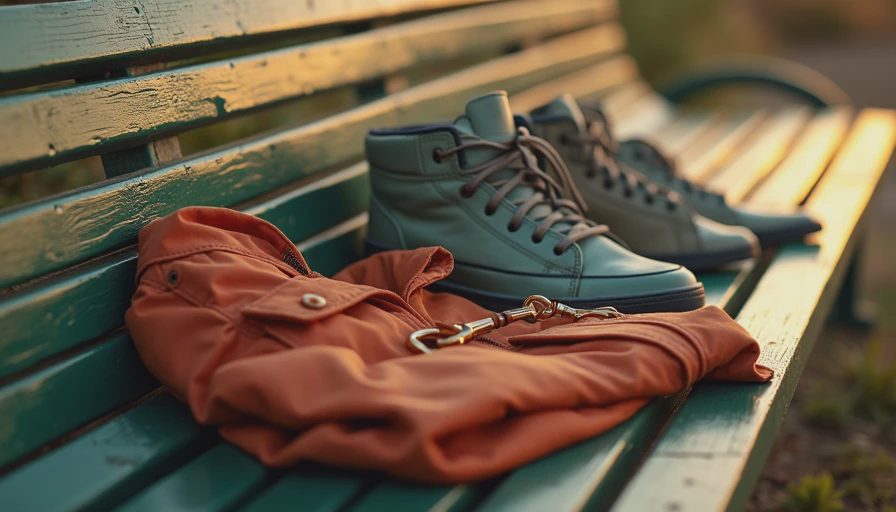
The buyer in me has a simple rule: if you can wear the same base outfit three ways in one week, you bought well. A striped tee, cardigan, and straight jeans can go from leash clip to school drop-off to a quick Target run. That kind of outfit saves time and keeps you from buying a separate category of clothes just to go outside for twenty minutes.
Weather-proof it without looking overly technical
Denver weather likes a little drama, so outerwear matters. For outfits for dog walks, I usually want one layer that can handle wind, light rain, or a surprise temperature drop. A Barbour waxed jacket, a Patagonia Nano Puff, or a lightweight rain shell from L.L.Bean all do the job differently. The Barbour feels more lived-in and classic. The Patagonia works if you want warmth without bulk. The shell is the one to grab when the sky looks suspicious and you do not want to babysit a fabric finish.
This is where cost per wear gets real. A $180 jacket worn five mornings a week all fall can be a bargain if it keeps you dry and stops you from buying three lesser versions. The same goes for a beanie, a crossbody bag, or fingerless gloves you toss by the door. One good outer layer is cheaper than a closet full of almost-right ones, and it makes the whole routine smoother.
The best version is one you can shrug on while Scout is already halfway down the stairs. That means a zip that actually zips, pockets that hold keys and treats, and a length that does not bunch up around your hips when you crouch to clip the leash. If you have ever tried to wrangle a collar while holding a coffee, you know why that matters.
Small upgrades that make it look intentional
You do not need accessories for dog walks, but a few low-key choices can make a very ordinary outfit look finished. A baseball cap hides the fact that you left the house early. Simple hoops or studs make a sweatshirt feel less like you slept in it. Sunglasses help even when the sun is weak, and a good tote or crossbody keeps your phone, treats, and keys from disappearing into coat pockets.
Color also does a lot of work. Cream, camel, olive, navy, and black always look calmer than a random mix of neon gym pieces. That does not mean you need to dress like a neutral catalog. It just means one or two repeated colors make the whole thing feel like a system. If your dog loves mud, maybe do not wear head-to-toe ivory and pretend you are above the problem. That is how laundry learns to hate you.
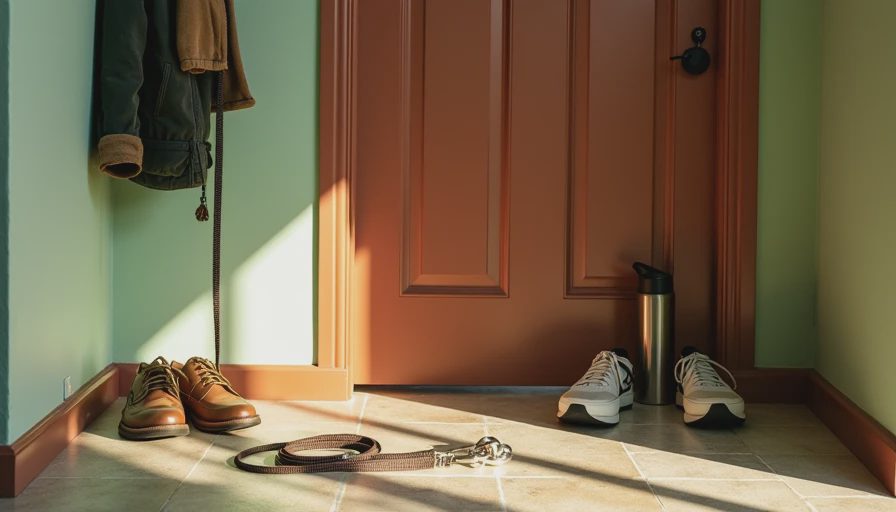
I also like one thing with a little texture, because it keeps the look from going flat. Ribbed knits, brushed fleece, washed denim, and waxed cotton all read more thoughtful than shiny performance fabric from head to toe. The goal is not perfection. It is looking like a person who stepped outside on purpose.
Pieces I would buy again, and the ones I would skip
If I were rebuilding this part of my closet, I would start with a pair of sneakers I actually like looking at, one weatherproof jacket, two easy bottoms, and a handful of tees that wash well. That could mean New Balance 574s, a Madewell Perfect Vintage jean, an L.L.Bean barn coat, and a couple of Everlane or Uniqlo tees. None of those are exciting in the usual fashion sense, which is exactly why they work. They are the boring heroes. They show up.
I would skip anything delicate, overly bright, or fussy at the hem. White suede, wide hems that drag, and coats that need special care after one drizzle are not doing you any favors on a Tuesday morning. The same goes for shoes that look cute until you actually walk in them. If the walk is part of your real life, the outfit has to survive real life too.
A few formulas you can copy tomorrow
If you want outfits for dog walks that also handle coffee, school drop-off, or a quick errand, try this: sneakers, straight jeans, striped tee, and a quilted vest. Or try leggings, an oversized sweatshirt, long socks, and a rain shell. On colder days, go with a fine-gauge knit, a long coat, and waterproof boots. None of these looks is trying too hard, and that is the point. They work because they are repeatable.
I think the sweet spot is when you stop saving your good clothes for later and let them live a little. That does not mean being precious about every stain or scuff. It means buying pieces that can take a little weather and a lot of mileage. If you want the short version, keep one shoe you trust, one layer you can grab, and one bottom that never makes you think twice. Wear it and go.



No notes yet — write the first one.