The first time I got mountain trip packing clothes right, it was because I stopped dressing for the idea of a mountain weekend and started dressing for the actual weather. In Denver, that can mean a cold dawn, a sunny lunch, and a windy trailhead that makes cotton feel like a mistake. After seven years buying women's apparel at Nordstrom, I can tell you this: the smartest bag is usually smaller than you think, and the best pieces are the ones that work for coffee, a hike, and dinner without making you feel like you changed personalities.
Start with the forecast, not the fantasy
For mountain trip packing clothes, I start with the forecast and the elevation, not the cute Instagram outfit I wish I had packed. A town at 7,500 feet and a trailhead another 1,500 feet up can feel like two different seasons. Summer brings afternoon storms, spring can still have snow, and shoulder season can swing twenty degrees by lunch. That is why I check the weather for both the town and the highest point I expect to hit.
Then I choose fabrics that forgive a little chaos. Merino wool, nylon blends, and lightweight fleece dry faster than cotton and smell better after a long drive or a sweaty hike. A good example is the kind of tee you get from Icebreaker, Smartwool, or even Uniqlo when you want something inexpensive and easy. If you want a nice sweater, look at Patagonia, J.Crew, or Quince, depending on whether you want performance, polish, or lower price. None of this has to be fancy. It just has to keep working after day one.
Build a layer system you can repeat
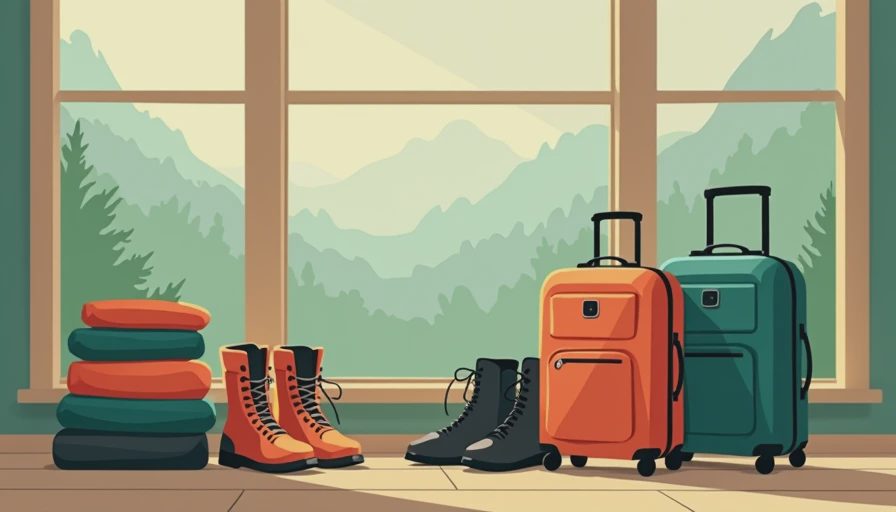
For mountain trip packing clothes, layers are the whole game. I think in three parts: something next to skin, something that holds warmth, and something that stops wind or rain. That means one or two base layers, one midlayer, and one shell. It is boring in the best way, because boring is what saves space and makes you comfortable.
A merino tee or long-sleeve works as a base layer because it can wear alone at brunch and still help under a sweater later. A fleece or lightweight puffer is the midlayer that earns its keep when the sun drops behind the ridge. If you are buying new, Patagonia’s Better Sweater, Athleta’s lightweight puffers, and REI Co-op layers are all sensible places to start. On the less expensive end, Old Navy and Target have decent throw-on fleeces if you only need one for a single trip.
Your shell matters more than most people think. I like a packable rain jacket with a real hood, not the flimsy plastic kind that makes you sweat inside it. Marmot, Columbia, and Arc’teryx all make versions at different price points. If you are only heading to the mountains once or twice a year, a midrange shell around $100 to $180 is plenty. Buy one that fits over a sweater, and suddenly your whole bag gets easier.
Pack outfits, not options
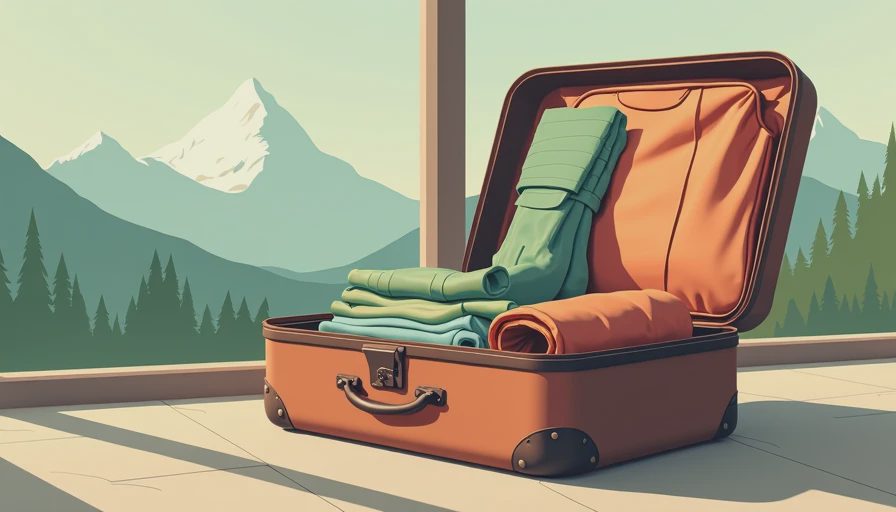
For mountain trip packing clothes, I like a small outfit formula instead of a closet in suitcase form. One travel outfit. Two day looks. One dinner outfit. Two sleep sets if you want to feel civilized. That is usually enough for a long weekend, especially if your hotel has laundry or you do not mind rinsing out a base layer in the sink.
My go-to version is simple: black leggings or straight-leg pants, one pair of jeans, one soft knit, one tee, one button-down, one warmer layer, and one dress if the trip includes dinner somewhere with actual lighting. Madewell jeans, a Spanx or Athleta legging, and a striped tee from Marine Layer or Everlane will all get along just fine. Add a neutral sweater and you can repeat pieces without looking repetitive, because the mountain is not a fashion show and nobody is keeping score.
The trick is to mix one polished item with one practical item. A sweater plus trail pants works. Jeans plus a clean sneaker works. A dress with tights and a cardigan works if you are the sort of person who likes that. I do this a lot when I am heading to Estes Park or Steamboat, because I want a bag that feels calm instead of overstuffed.
Shoes, bags, and the one thing people overpack
Shoes are where mountain packing gets dramatic. People bring too many because they are trying to solve every possible mood. You do not need that. You need one shoe for walking, one shoe for the trail if you are doing real hiking, and maybe one nicer pair if dinner is part of the plan. That is it. Trail runners from Hoka, Altra, or Brooks are great if you want something lighter than a hiking boot. A simple white sneaker works for town and travel days. If the weather is messy, a waterproof hiking boot from Merrell, Salomon, or Keen is a safer bet than trying to make fashion boots do outdoor work.
The thing people overpack most is denim. Jeans look easy, but they are heavy, slow to dry, and annoying if you get caught in weather. One pair is enough. Two is almost never necessary. If you want a spare bottom, make it a legging, jogger, or travel pant that can earn more than one outfit.
I also like a soft tote or weekender with a bit of structure. Think Lo & Sons, Dagne Dover, or a simple Patagonia Black Hole duffel if you want function first. Packing cubes help, but the real win is pre-building your looks before you leave the house. That saves the 9 p.m. suitcase shuffle where everything ends up on the bed and nobody is happy.
Where to spend, where to save, and a simple sample loadout
If you are building mountain trip packing clothes from scratch, spend on the pieces that touch the weather first: the shell, the shoes, and one warm layer you actually love. Save on tees, sleepwear, and extras that do not need to be technical. A $160 puffer that gets worn thirty times a year is cheaper in real life than a $60 cute jacket that sits in the closet because it is cold at the exact wrong moment. That is just cost per wear math, the kind I cannot stop doing in my head.
A clean sample loadout for a three-day trip looks like this: one tee, one long-sleeve, one sweater, one puffer, one shell, two bottoms, one dress or extra layer if you want it, three pairs of socks, three pairs of underwear, sleepwear, and two pairs of shoes. You can trim or add depending on plans, but that is a solid starting point. If the trip leans more outdoorsy, swap the dress for a second base layer. If it leans more cabin-and-wine, keep the dress and skip the extra pant.
The nice part is that once you nail your version, packing gets fast. You stop overthinking, your bag gets lighter, and you actually wear everything you brought. That is the whole goal. Wear it and go.



No notes yet — write the first one.